What is Mindfulness?

Mindfulness
Mindfulness can be a buzz word, what does it actually mean?
“Mindfulness is awareness that arise through paying attention, on purpose, in the present moment, non judgmentally.”- Jon Kabat-Zinn.
It is our awareness of our external and internal world without judgment's in the present moment. Switching to wonder and curiosity in stead of judgement.
It is an opportunity to connect within to create calm and clarity. A wellbeing tool that is easily accessible in any and every moment.
What are some of the benefits of mindfulness?
Reduce anxiety and lower stress
Improved focus and attention- thinking and self control
Better emotional regulation and reactivity
Memory and executive functioning
Calmer and more connected relationships
more connection to self - mindful body awanress
Benefits of Mindfulness in the classroom
Increased emotional regulation
Increased social skills
Increased attention
Increased working memory and planning and organisation
Increased self esteem
Increased sense of calmness, relaxation and self acceptance
Increased quality of sleep
Decreased negative affect/ emotions
Decreased Anxiety
Decreased depression
Fewer conduct anger managements problems
The Brain and Mindfulness
How does Mindfulness support learning?
In our brain we have a little almond shape area called the amygdala, part of the limbic system. The Amygdala (the emotional center of the brain) amplifies our emotions and when we are operating from here we react quickly, think fight, flight, freeze. It tries to protect us, but can mistake stress for danger. The Hippocampus stores memories but it shuts down when the amygdala is upset. The area of the brain that accesses information from the amygdala and the hippocampus to make decisions is in the pre frontal cortex. But decision making shuts down of the prefrontal cortex cant access any of that information aka the ‘stress or danger’.
Mindfulness can help calm us down, create space for regulation and reaction, which allows for clear thinking to happen, that we are not able to access when the amygdala is activated we flip our lid. Dr Daniel Siegle.
When we have opportunities to be mindful and switch our brain into a grounding state, children are more available for learning. Their body feels safe and connected to concentrate, focus and take in information.
Mindful Hearts Framework
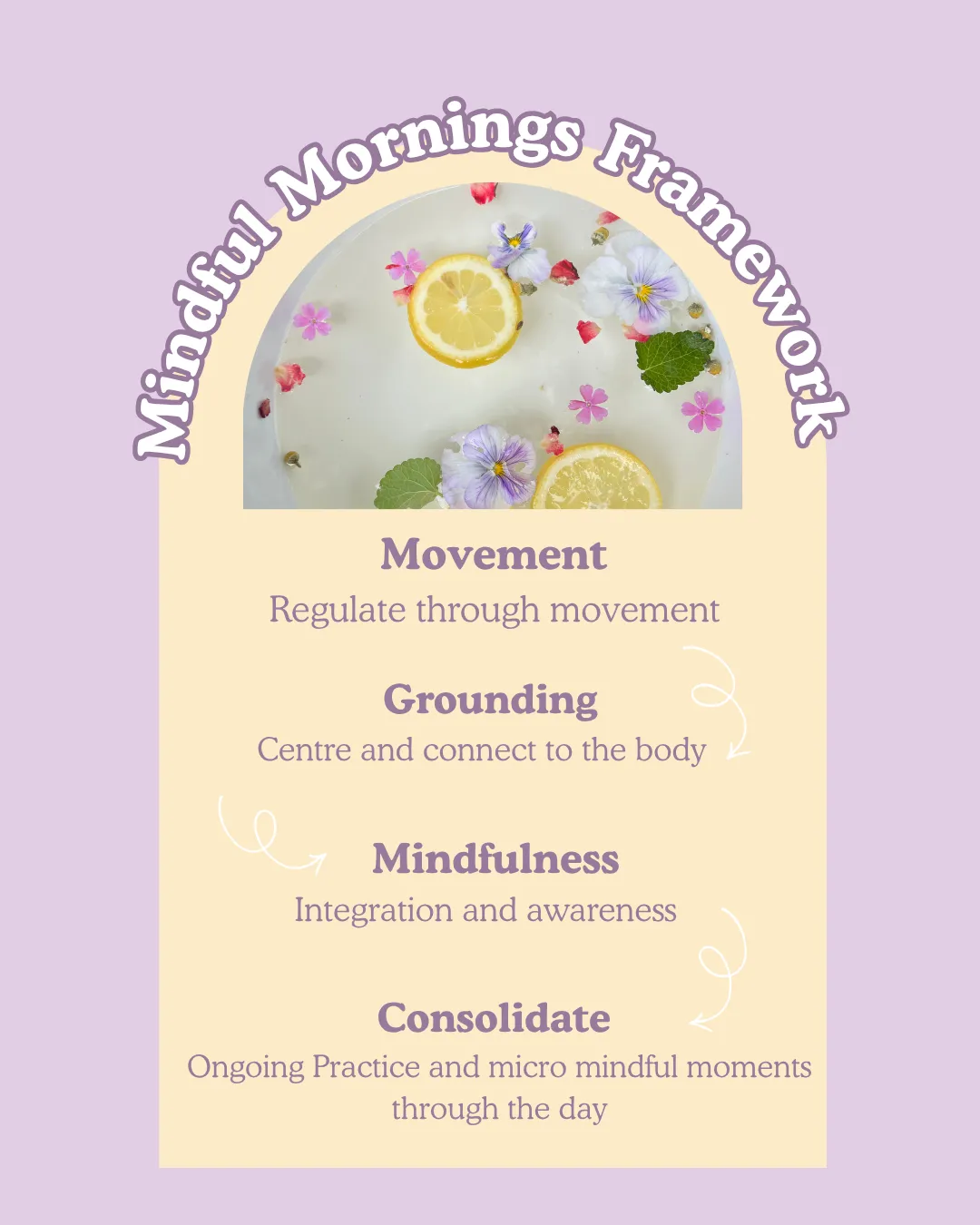
The Mindful Hearts Program is easily digestible. It begins with a Mindful Mornings Framework. Here we see mindfulness broken up into 3 stages.
Movement, Grounding and Mindfulness. There are also opportunities for connection and consolidation.
Preparation stage: Connection:
Connection is the first touch point in the MM framework. Children need connection to feel safe and a sense of belonging. Having a morning connection time with teachers and students sets the day up for success. When children feel safer in their classroom, they feel safer in their body.
The very first part of this step is allowing a small opportunity for Teachers to connect to themselves as well using micro mindfulness, Because connect to and feel your nervous system state. .
Movement:
Children need movement. There are specific movements that can help children get out build up energy, regulation and oxygenate the brain, primed for learning. Building calm and improving focus and learning. Movement is so undervalued- it has such a huge reward on its return. Investing in movement will have great benefits for your classroom environment.
Grounding
The next step in the mindful mornings framework is grounding. Once children have gotten their energy out its time to connect back in and calm the body.
This is the quickest step and is just about taking a few moments to connect to the senses and self. A gentle check in with themselves. Building their self awareness and mindful body awayness skills (interoception). Priming the body and brain for our next step. Integration of Mindfulness
Mindfulness:
Mindfulness is paying attention to the present moment. For children mindfulness is often active and playful, it doesn't have to look like meditations or stillness. Activities are pre planned and meaningful to children.
Mindfulness helps build attention and focus, which we know are building blocks for learning. It helps calm and build emotional regulation, create self awareness, and build empathy and connection.
+ Consolidate
Ongoing Practice and micro mindful moments through the day
Creating a routine for touch points throughout the day. Do children need a movement break, do they need to ground or have a mindful moment- This step helps you look for the signs and decided what might suit your classroom best at this moment. You will get really good at noticing the signs and what your class need, and yourself. The more you practice these tools, the more you will benefit. Small micro moments throughout the day make a huge impact.
If you would like to know more: book in a workshop to see how we can arrange a professional development session